
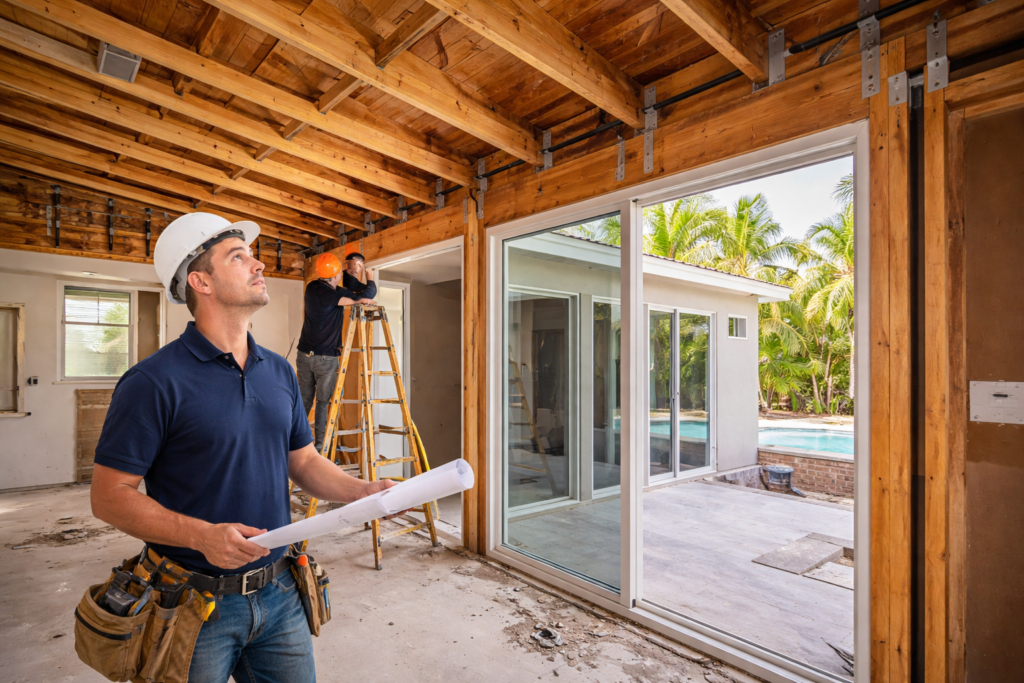
Florida Building Code updates 2025 are reshaping how renovations are planned, priced, and permitted — and homeowners need to plan accordingly.
The Florida Building Code is updated on a three-year cycle, with the 8th Edition (2023) currently in effect and expected supplements and preparations underway for the future 9th Edition (2026). These updates include enhanced requirements for wind resistance, energy efficiency, structural integrity, and storm resiliency that directly affect residential renovations across the state.
Understanding these changes — and what’s coming — isn’t just good to know; it’s essential for accurate budgeting, successful permitting, and project compliance.
What the Florida Building Code Is and Why It Matters for Renovations
The Florida Building Code (FBC) is the statewide standard governing construction design, alteration, repair, and remodeling. It integrates structural, mechanical, electrical, plumbing, energy, and safety provisions that contractors and homeowners must follow when renovating.
The current 8th Edition was adopted with the intent to improve:
- Hurricane resilience and wind resistance
- Structural and roof system integrity
- Energy conservation standards
- Safety provisions for building systems
These provisions apply to permits, plans, inspections, and construction of both new and existing buildings.
Working with a licensed general contractor like TOLT Construction that stays current on these code changes helps ensure your renovation plans and execution meet jurisdiction standards and avoid costly rework.
Florida Building Code Updates 2025 – What’s Already in Effect.
Though the 8th Edition became effective in late 2023, many of the current 2025-relevant requirements still apply and homeowners must budget for them:
1. Wind Resistance & Structural Standards
Florida’s updated code emphasizes enhanced wind resistance for roofs and structural systems — particularly important for renovations that alter roof connections, diaphragm strength, or wall-to-roof framing.
If your renovation involves modifying roof structures or connections, you may need to upgrade to meet the latest wind load criteria.
Budget impact:
- Better fasteners and connectors
- Reinforced roof decking
- Enhanced tie-off systems
Roofing partners like roofccc.com are familiar with these updated requirements and can help bid and plan compliant systems.
2. Energy Efficiency and Envelope Requirements
While the Florida Building Code maintains efficiency standards under the Energy Conservation section, ongoing updates push for better performance in insulation, ventilation, and glazing.
This means renovations involving:
- Window replacements
- Door replacements
- Exterior insulation upgrades
may require more stringent compliance depending on your jurisdiction.
Budget impact:
- Higher-rated windows and doors
- Better insulation materials
- Compliance testing
These items should be included in your project budget to avoid permit delays or failed inspections.
3. Revised Roof-Related Requirements
In recent years, code changes have also affected roofing systems, including:
- Roof underlayment requirements
- Roof diaphragm uplift resistance
- Water infiltration protections
- Enhanced connection standards for wind zones
These improvements are aimed at reducing water intrusion and structural damage during severe weather.
Budget impact:
- Premium waterproof underlayment
- Impact/pressure-rated materials
- Coordination with structural upgrades
Roofing costs can increase when upgrades go beyond aesthetics into compliance-driven improvements.
What’s Coming Next: Florida Code Development and Future Editions
The Florida Building Commission is already working on the 9th Edition (2026), which will eventually replace the current code and may introduce further changes affecting renovation requirements.
Proposed enhancements include:
- Increased impact resistance standards for fenestrations
- Coordination of wind and water intrusion protections
- Integration of new model code references
- Additional focus on sustainable and resilient systems
Housing owners working with renovation plans should plan for future code adoption timing and budget adjustments.
Permit & Inspection Timelines Are Changing Too.
Update cycles to building codes are only one part of the picture — permit review processes and inspection requirements are also evolving. Many municipalities are requiring:
- More detailed plans and documentation
- Multi-department reviews on structural, electrical, and energy compliance
- Extended comment periods that can increase approval timelines by 10–20% or more.
This doesn’t necessarily mean your project is more expensive — but it does mean you must plan costs and timelines with these realities in mind.
What Homeowners Must Budget For in 2025 and Beyond
When planning a major renovation in Florida under evolving codes, homeowners should budget for:
1. Code-Driven Upgrades
- Enhanced structural connectors and framing
- Impact-rated windows and doors
- High-wind roof systems
- Energy-efficient envelope components
2. Permitting & Plans Costs
- Professional drawings
- Hazards/storm mitigation scope
- Plan reviewer fees
- Longer plan review cycles
Budgeting early — and with a contractor who understands code evolution — saves money and time.
Why Professional Execution Matters
Florida Building Code Updates 2025 and How They Impact Renovations.
Renovations that don’t align with building code updates can be held up by building departments, require rework, or fail inspections — all of which add cost and delay. This is where professional oversight, like working with TOLT Construction, makes a difference.Florida Building Code updates 2025 require homeowners to plan renovations with stricter compliance and higher material standards in mind.
If your renovation includes complex elements like structural adjustments, roof replacement, or envelope upgrades, sequencing, documentation, and code compliance must be managed proactively.Many renovation delays in 2026 stem directly from Florida Building Code updates 2025 that were not budgeted for early.
Coordination with roofing experts like Roof Roof, along with inspection-to-execution clarity used by firms like J Reyes Investments, helps translate code requirements into buildable, compliant plans — removing friction at permitting and inspection.When evaluating renovation scope, Florida Building Code updates 2025 should be treated as baseline requirements, not optional upgrades.
Florida Building Code updates 2025 also affect permit review timelines and inspection expectations across most Florida jurisdictions.
Final Takeaway for Homeowners
Florida Building Code updates 2025 and forthcoming revisions are more than technical details — they directly impact your renovation budget, schedule, and compliance.
To avoid surprises:
- Educate yourself on current code requirements
- Budget for compliance-driven scope
- Work with contractors familiar with Florida’s evolving standards
- Plan early and build code into your estimates
Renovations that meet or exceed code not only protect your investment — they can improve long-term durability, safety, and resale value.
Need Help Planning Your Code-Compliant Renovation?
If you’re planning a renovation that must align with Florida Building Code updates — including roof, structural, or energy efficiency requirements — professional coordination makes the difference.
👉 Contact TOLT Construction to review your plans and ensure your project is compliant, well-sequenced, and accurately budgeted.